01
Hard to read
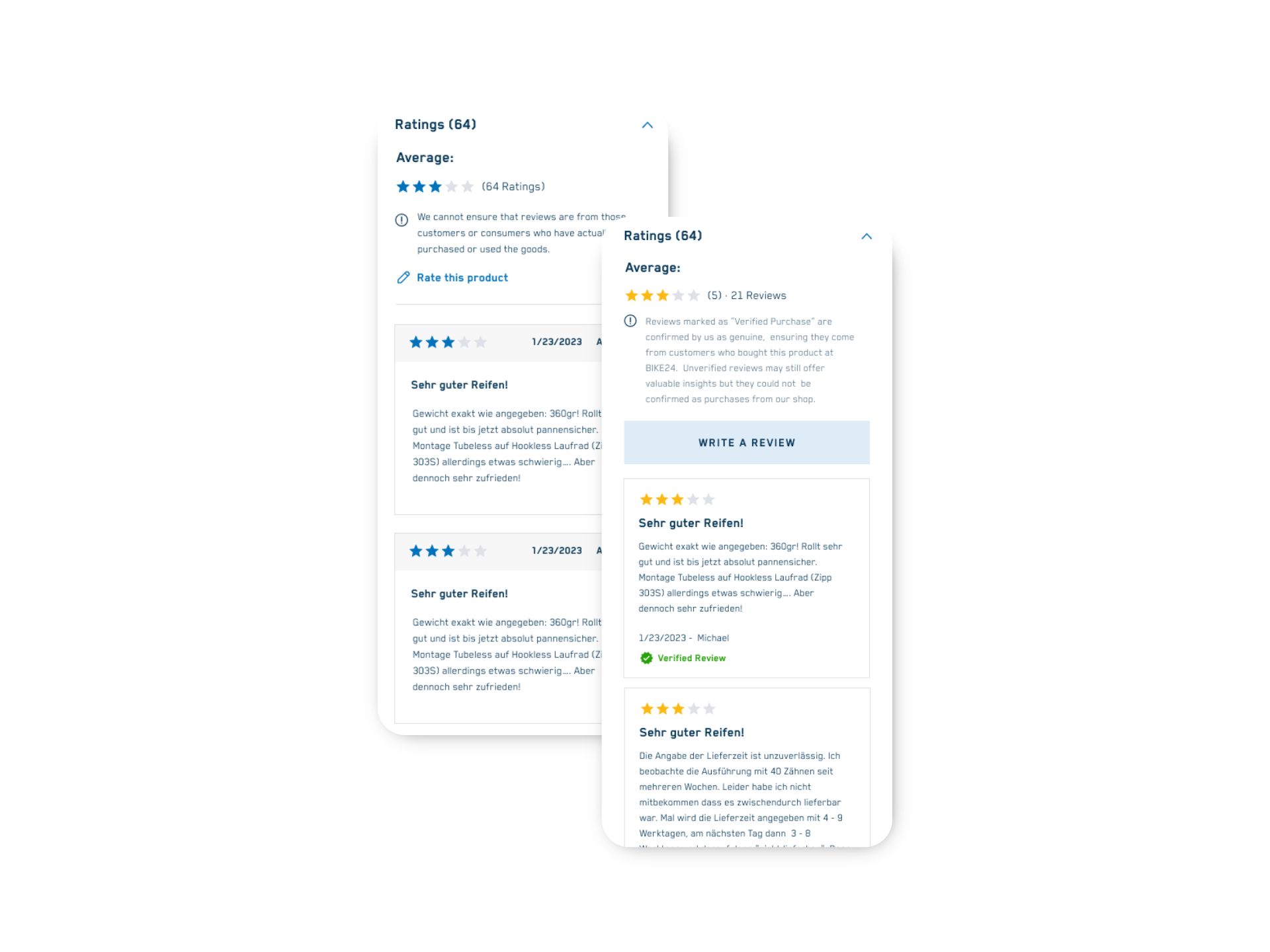
Ratings and review quality were difficult to scan on the product page.
E-commerce · Customer trust
I led a six-month redesign of BIKE24’s product-review experience—from how reviews are collected and verified to how shoppers read, compare, and act on them.

At a glance
Product reviews were difficult to scan and lacked clear signals that helped shoppers judge credibility.
Low confidence can make product comparison harder and leave useful customer feedback underused.
Improve the full review loop: invitation, submission, verification, and product-page discovery.
The review redesign combined an A/B test with a broader launch, followed by reported gains in purchase conversion, rating, and trusted feedback.
01 / The challenge
BIKE24 offered a huge range of cycling products, but reviews were one of the least developed parts of the shopping experience. The review area was hard to scan, anonymous, and light on useful detail—making it difficult for shoppers to judge what to trust.
Ratings and review quality were difficult to scan on the product page.
Anonymous reviews offered little evidence that a reviewer had bought or used the product.
Satisfied customers had little encouragement to share their experience, while complaints could surface as low product ratings.
02 / Research & discovery
I combined customer interviews, past NPS surveys, Trustpilot reviews, stakeholder interviews, and workshops. I also benchmarked the same products across competitor sites to see where BIKE24’s ratings and review tools fell short.
Bike enthusiasts and casual riders both relied on reviews. They wanted more credible feedback, clearer product ratings, and practical ways to compare experiences. The team aligned on a broader goal: make it simple to write useful reviews and easier to find the evidence that matters.
Verified purchase details help shoppers understand who reviewed a product and give Customer Service a way to follow up when a review signals an order issue.
Shoppers needed more than a star total: readable feedback, a rating breakdown, photos, local-language content, and ways to assess helpfulness.
03 / Validate the direction
Before investing in a full redesign, I worked with the team to frame hypotheses about how review presentation and rating visibility might affect purchase confidence.
We defined product conversion, add-to-cart, and revenue as success metrics, then reviewed feasibility with the Product Manager and Tech Lead before prioritizing the roadmap with Engineering, QA, Customer Service, CRM, and Product.
Design process
The work moved through four focused phases. Together they covered roughly 12 weeks of discovery, planning, design, implementation, and testing within the six-month initiative.
Customer interviews, NPS, Trustpilot reviews, and stakeholder workshops surfaced trust and usability gaps.
Turn research insights into solution options, prioritized features, and a delivery roadmap.
Create and prototype the review experience, then refine it with stakeholder feedback.
Partner with Engineering, run A/B tests, and iterate against performance metrics.
Experiment results
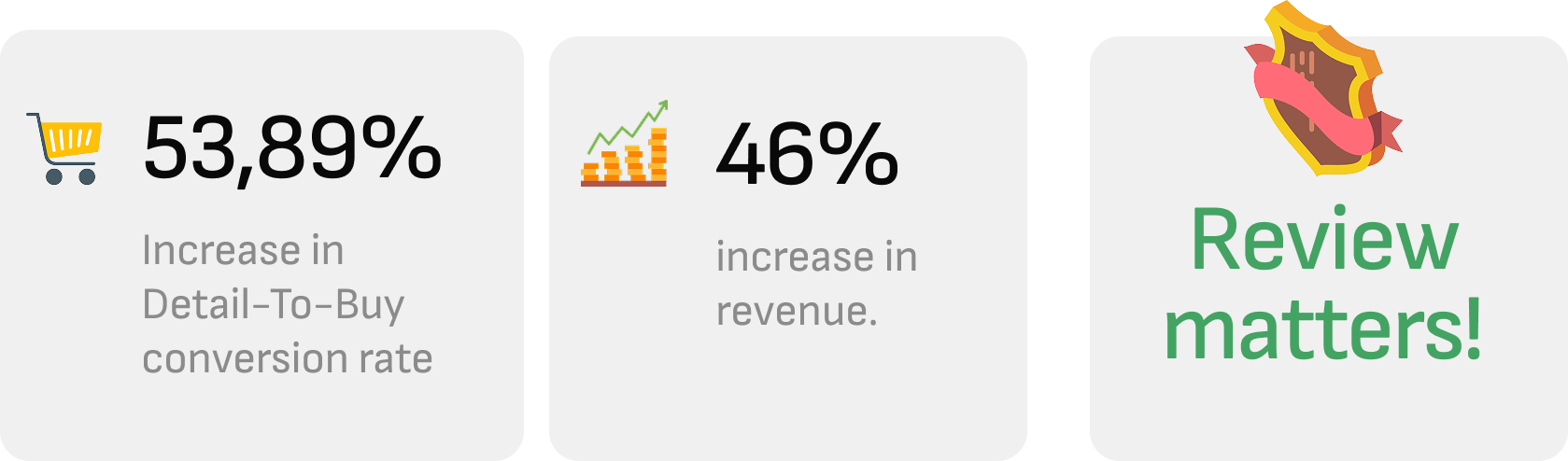
We tested review-presentation hypotheses against purchase behavior. The stronger test variant increased the purchase conversion metric by 53.89% and revenue by 46.05%.
The test duration, sample size, and statistical confidence are unavailable, so these figures describe the observed test variant and should not be read as a guaranteed long-term effect.
Reported uplift for the stronger review-presentation variant in the A/B test.
Reported uplift for the same stronger variant in the A/B test.
Post-launch average rose from 3.2 to 4.2.
04 / The solution
Rather than treating reviews as one widget, we improved the full loop: invite people to review, make submission quick, add trust signals, and help the next shopper understand the feedback.
Worked with CRM on email invitations to around 4,000 customers in the first month. A follow-up arrived two weeks after purchase, giving people time to use the product.
Interactive email ratings led directly into the review flow. Linking the invite and response to an order made verified reviews possible and gave Customer Service context to help.
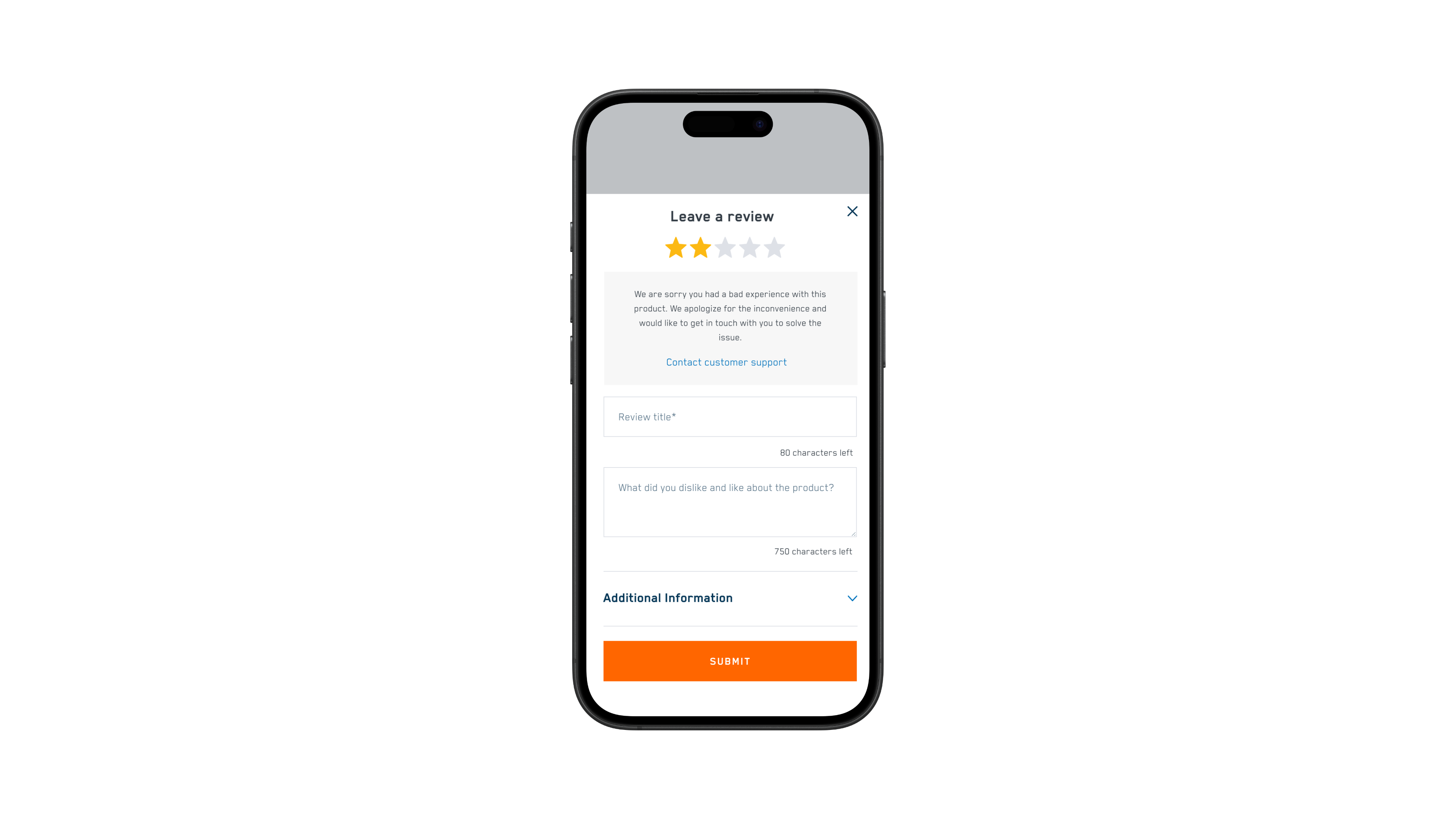
When a customer selected one or two stars, a prompt offered a route to Customer Service without blocking or hiding the review.
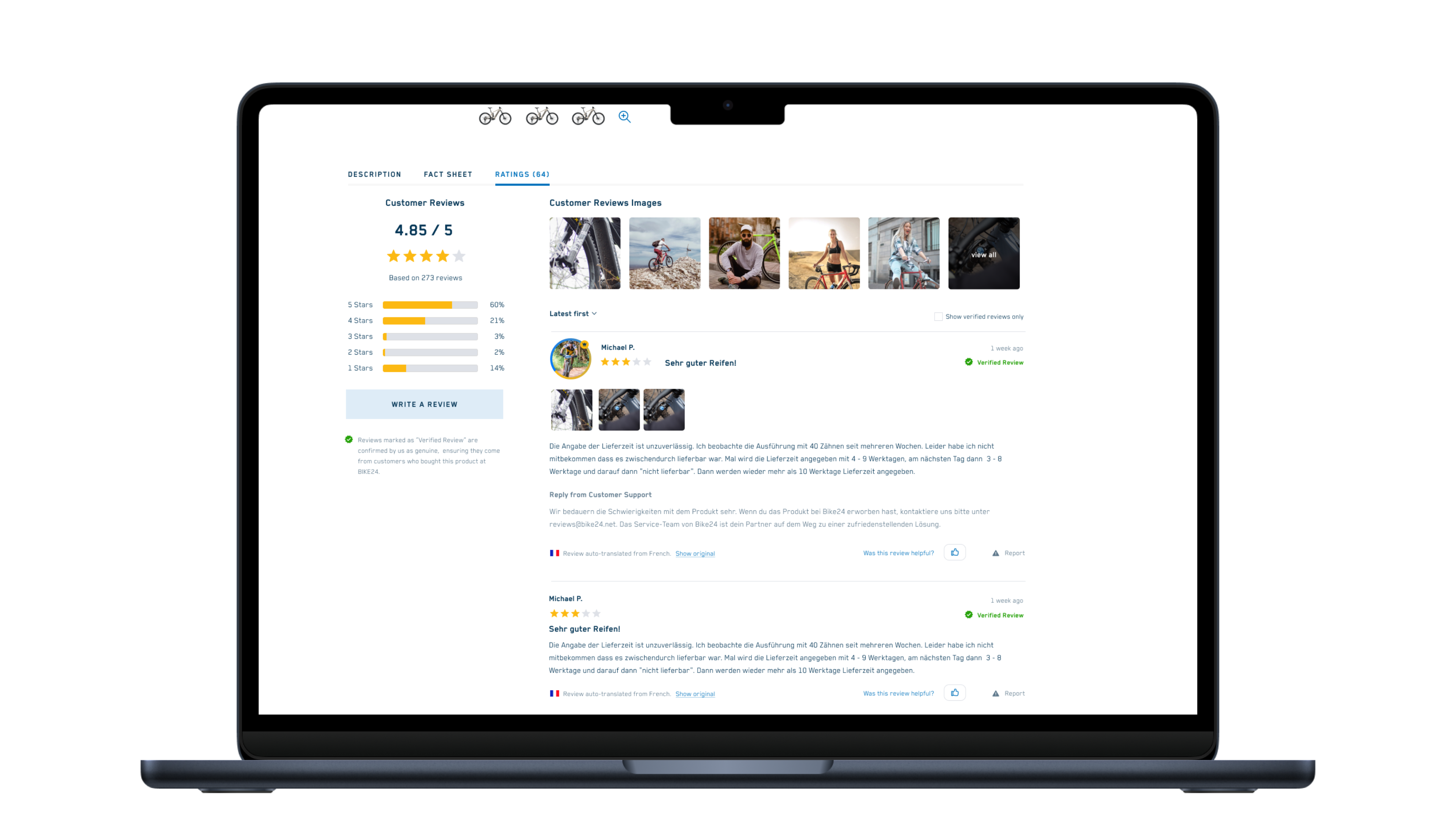
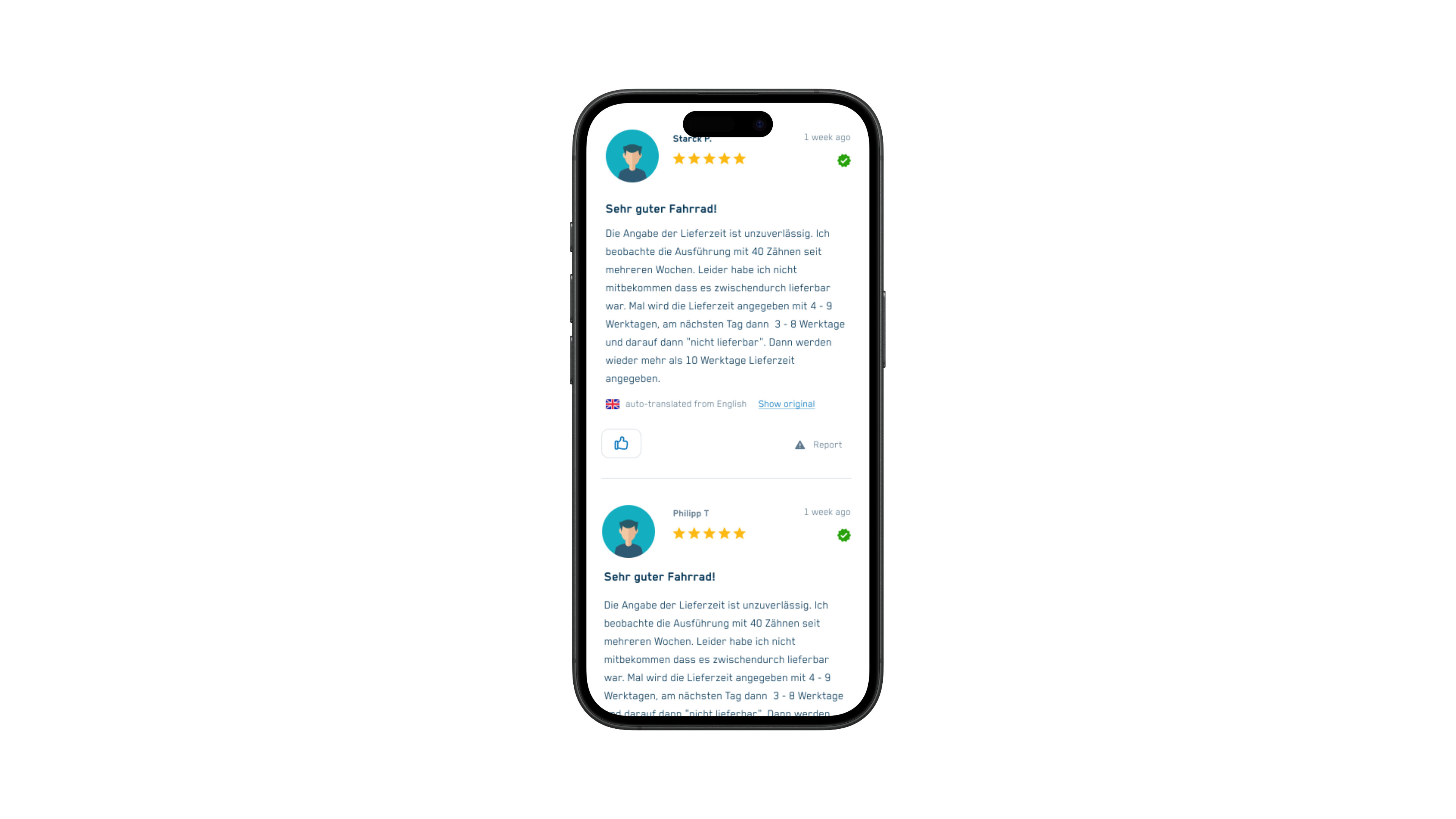
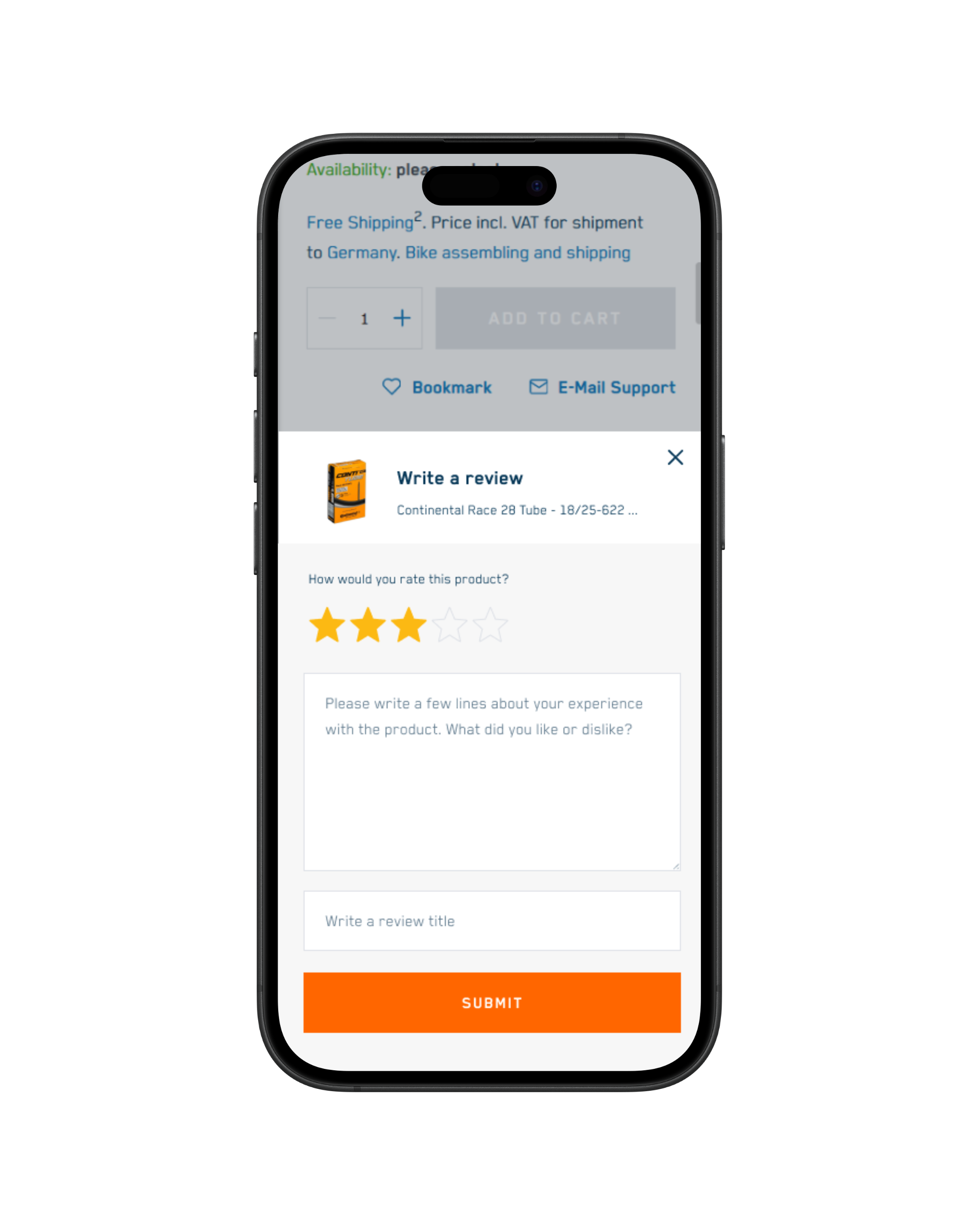
Added rating distribution, verified-review badges, media, auto-translation, helpful voting, and reporting. First-review and order-history entry points made contributing more accessible.
The redesigned experience
A closer look at the product-page review experience, rating breakdown, written feedback, and mobile review submission flow.


05 / Review invitations
Two weeks after purchase, an automated email invited customers to review the most expensive item in their last order. Customers could select a star rating in the email and continue directly in the product review flow.
The rules avoided duplicate invitations and gave customers enough time with the product before asking for feedback.
Setbacks & learning
Review incentives, internal reviews, limited Engineering capacity, and competing priorities all affected delivery. I documented decisions and learnings, then broke the work into milestones so the team could keep moving and validate value incrementally.
Engineering resources were limited, and other topics sometimes took priority. Incentivizing customers to review also needed careful consideration.
Keeping the design process and learnings visible helped align the team, manage scope, and deliver the review improvements milestone by milestone.
The outcome
After launch, the average rating and trusted-review volume increased while negative-review volume declined. These outcomes are reported for the project; the available materials do not include enough detail to confirm attribution.
Previous case study
Blacklane Help Center ↗Next case study
ThinkImmo Search ↗