15 min
Average phone hold
Long waits made time-sensitive travel issues more stressful.
Mobility · Guest experience
A redesign of Blacklane’s Help Center turned a call-first support journey into a contextual, chat-first experience—so guests could solve common booking issues in the app, on the web, and on the move.
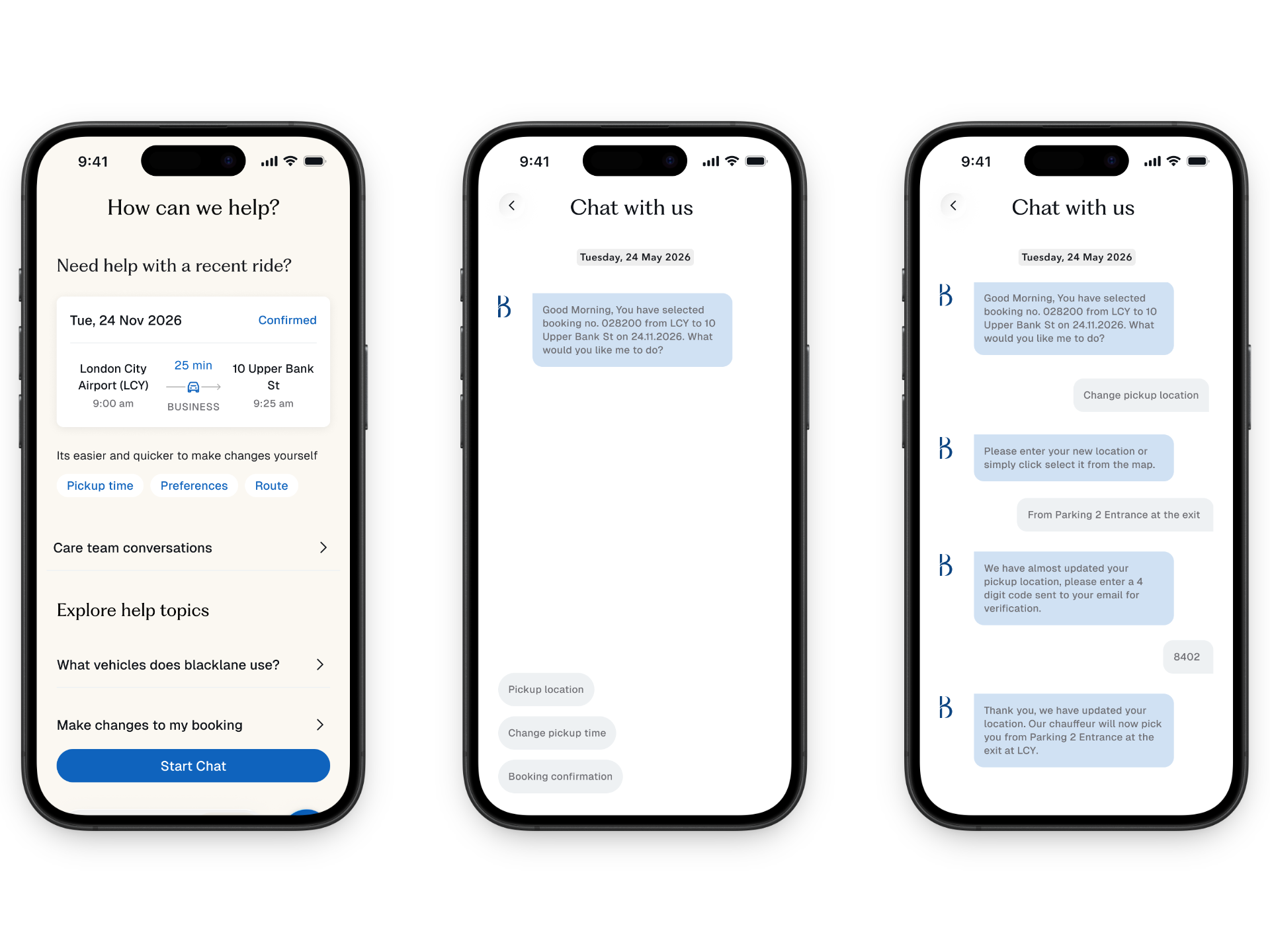
At a glance
Routine booking needs pushed guests into long phone holds, despite help content and chat already being available.
Support friction threatened a premium ride experience and made avoidable calls costly to serve.
Stage contextual Help, native chat, quick edits, and a clear urgent-support route across app and web.
Contact-rate and chat-deflection improvements are reported; definitions and attribution still need confirmation.
These are reported project outcomes. Confirm the contact-rate denominator, deflection definition, resolution-time comparison, and measurement source before treating them as attributable results.
01 / The challenge
Guests loved the chauffeur experience, but reaching support could break it. Even with live chat available, many guests called and waited—often for a small change or a simple booking question.
Long waits made time-sensitive travel issues more stressful.
Calls were a costly channel, at about $3 per resolution.
Calls and chats together were far above the 18% target.
02 / What the data showed
Mixpanel analytics and support data showed that the Help tab received around 23,000 visits each month. Guests already had useful help content and chat available, but the path to them wasn’t obvious or connected to the booking in front of them.
In the analysis, 22% of visitors started a chat, 13% called, and 17% interacted with help articles. The opportunity was to make the fastest useful next step visible, while keeping a clear route to a person for urgent or complex needs.
03 / The approach
I worked with Product, Engineering, Customer Service, and Post-Booking to shape a phased solution: improve discovery first, make chat feel native and contextual, then expand self-service as we learned from real guest behavior.
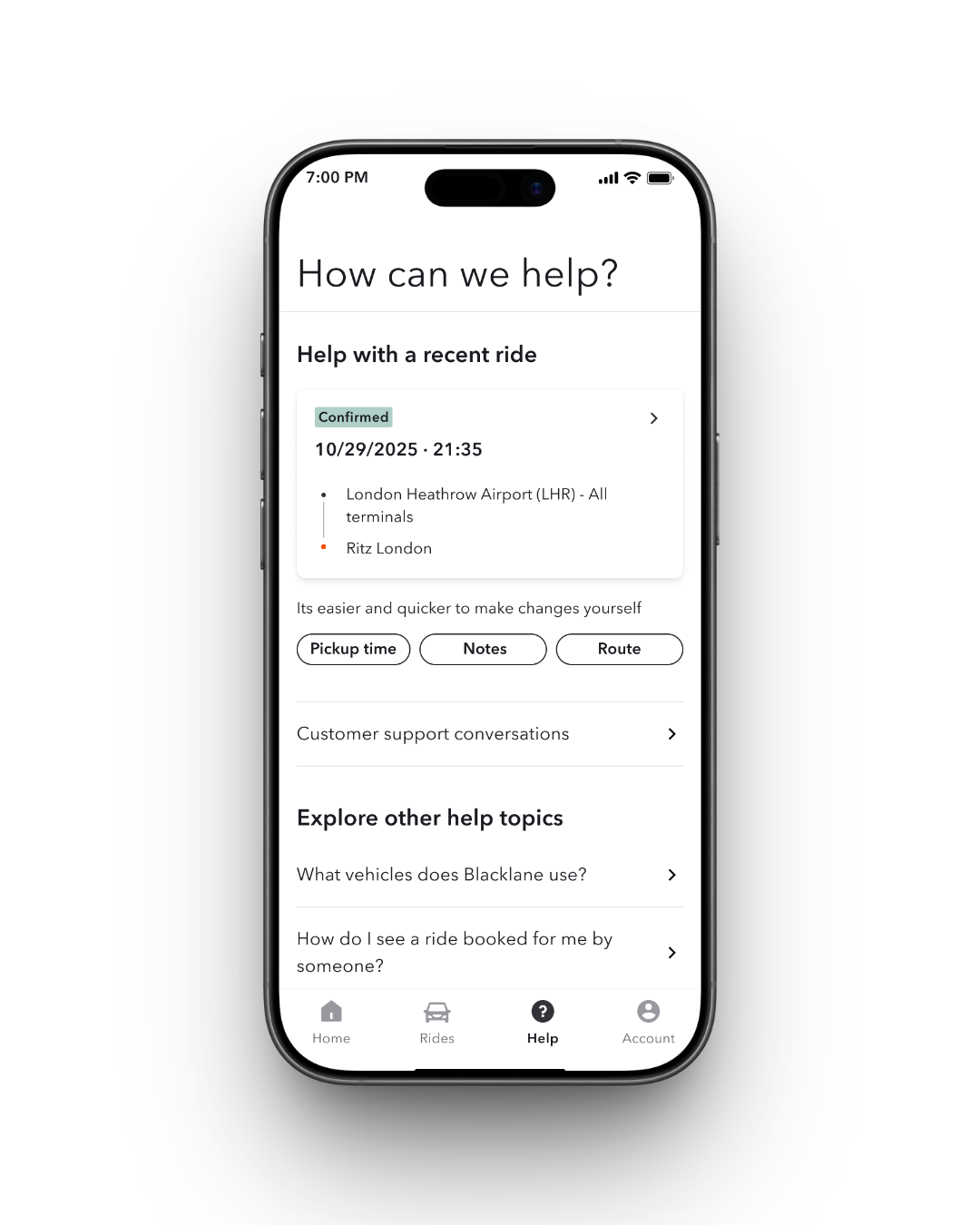
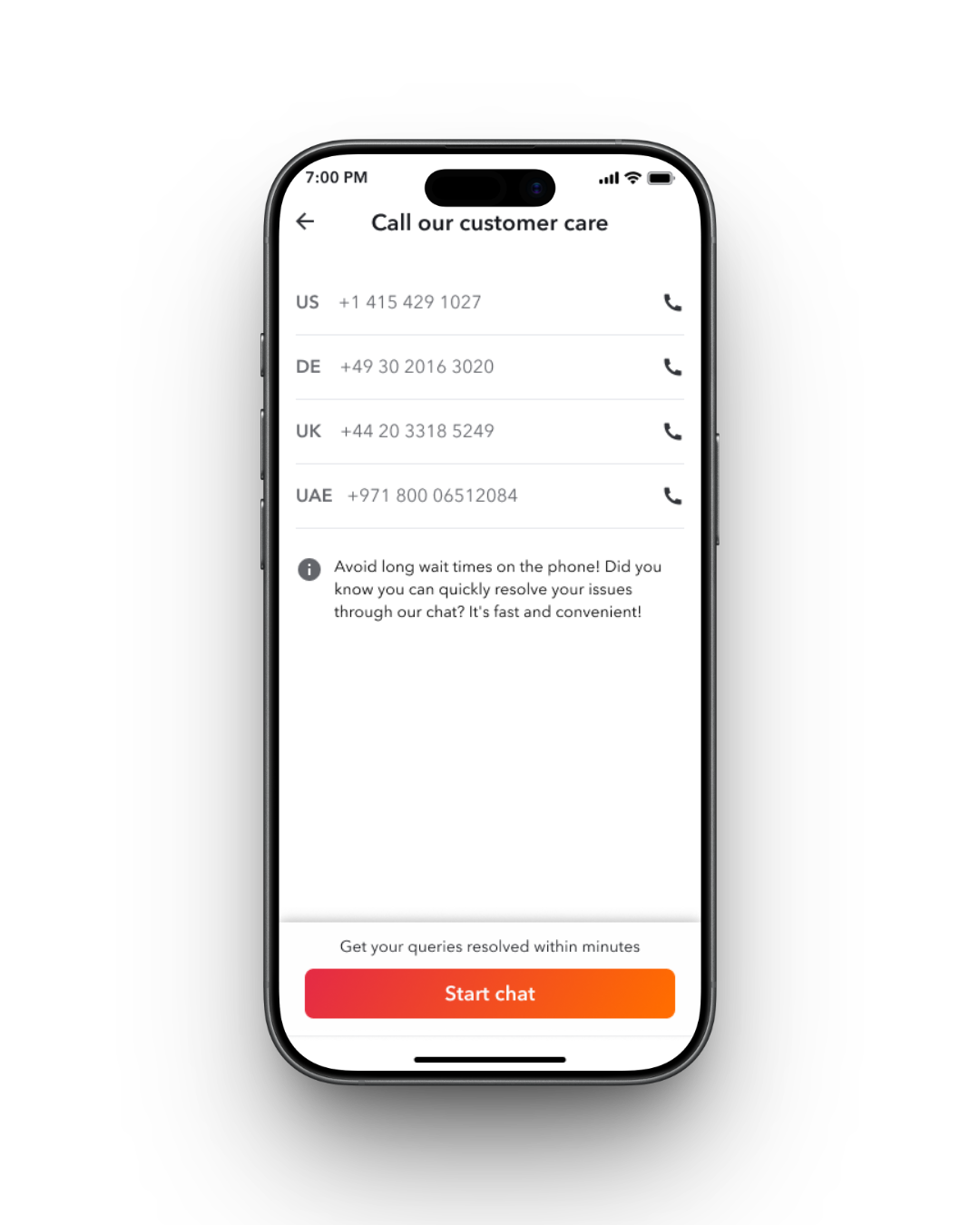
Made “Start chat” prominent, moved phone support behind an urgent-help route, added recent-ride context, and surfaced the five most-used help articles.
Moved from a slow web view to Intercom’s native iOS SDK. Persistent threads, push notifications, file sharing, and prefilled booking details reduced repeat effort.
For the mostly unauthenticated web audience, I emphasized self-service articles and clear chat entry points instead of a sticky chat widget or phone-first flow.
With Support and Post-Booking, we identified frequent minor edits and surfaced the three most useful “Quick Edit” actions directly from the Help screen.
04 / Learn and refine
The first two weeks of the sticky “Start chat” button reduced calls by about 50%, while chat starts rose by 150%. Some guests were exploring the new option without getting the answer they needed.
That signal shifted the focus from simply moving guests into chat to giving chat better context: the right ride, the right help topic, and a clear path to complete common changes.
Booking details are already at hand.
Quick edits, relevant articles, or chat.
AI handles supported booking updates.
The experience in context
The mobile Help screen puts a recent booking, useful self-service actions, and relevant topics together. Guests can move into chat when they need more help, while phone support stays available for urgent situations.
05 / AI that can take action
The next step was making AI useful for real booking tasks—not only FAQs. Contextual entry points and a prompt-based interaction model helped guests make complex, multi-booking changes with less manual work.
Make the same supported change across more than one reservation at a time.
Use ride and guest context instead of asking customers to locate booking numbers.
A prompt-based conversation helps guests describe the change they need.
For example, a guest could add a baby-seat note across three upcoming trips in under two minutes. The AI chat experience also supported complex booking modifications and let guests make multiple edits with minimal typing.
The outcome
The project materials report lower contact rates and higher chat deflection after a staged rollout. The experience grew from a clearer Help screen into contextual, action-capable support across platforms; the metrics remain subject to definition and attribution checks.
Next case study
BIKE24 Reviews ↗